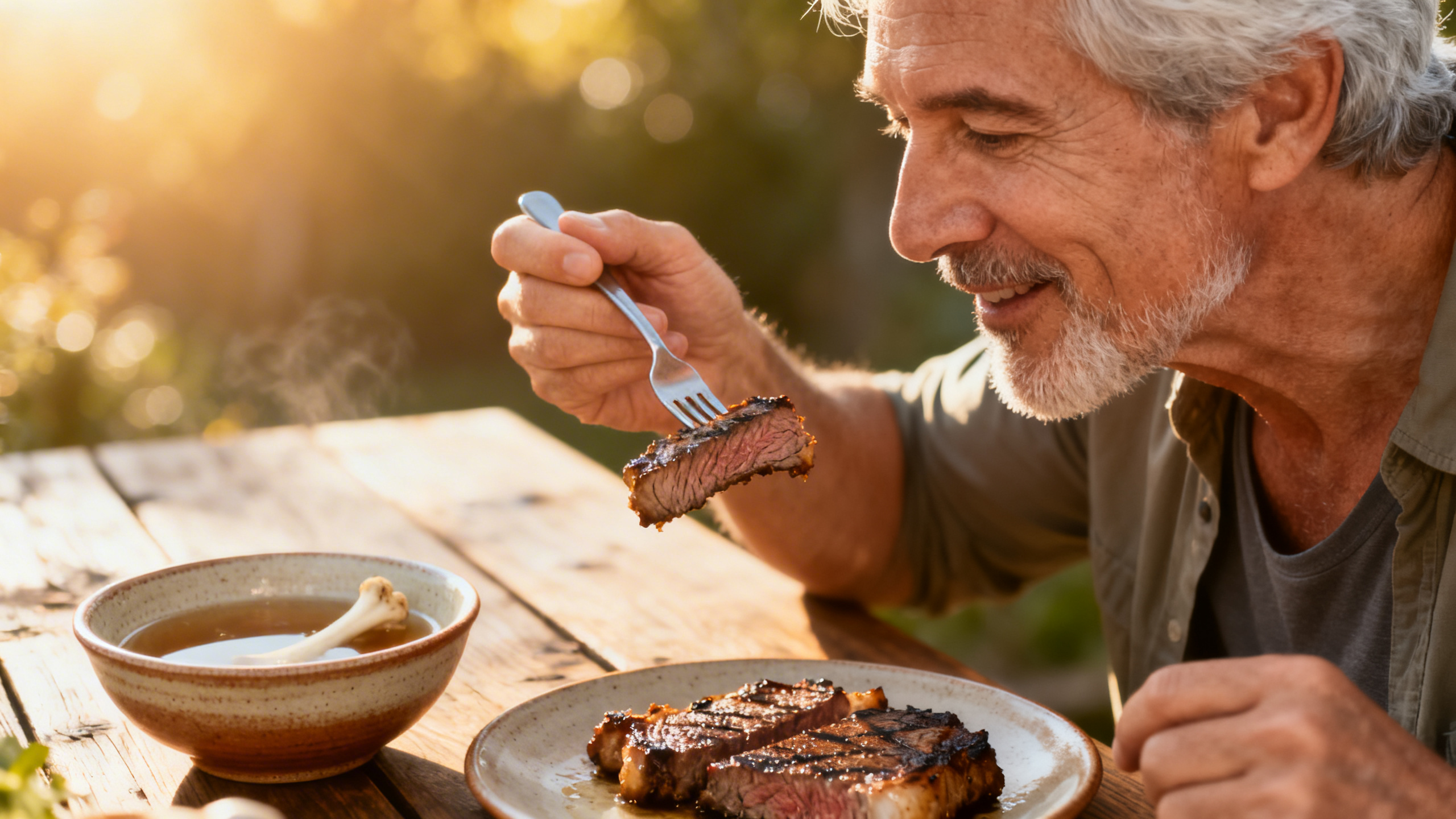
As we age, nutrition becomes more important, not less. I’ve connected with many people over 60 who’ve found carnivore transformative for their energy, mobility, and cognitive function. The nutrient density of animal foods addresses many of the specific nutritional challenges that come with aging. Let me walk you through why carnivore can be particularly powerful for seniors and how to approach it safely.
Protein Needs Increase with Age
After age 50, your body becomes less efficient at using dietary protein to build and maintain muscle. This means you actually need more protein than younger adults, not less. Research suggests 1.0-1.2 grams per kilogram of body weight daily for older adults, compared to 0.8g for younger adults. Carnivore naturally provides high-quality, complete protein at every meal—making it easier to meet these increased needs without effort.
Preventing Sarcopenia: Muscle Loss with Aging
Sarcopenia—age-related muscle loss—is one of the biggest threats to independence and quality of life as we age. It increases fall risk, reduces mobility, and impairs metabolic health. The combination of adequate protein from carnivore and resistance exercise is the most effective strategy to combat sarcopenia. Animal protein contains all essential amino acids, particularly leucine, which is the primary trigger for muscle protein synthesis.
Bone Density and Joint Health
Contrary to the old myth that protein leaches calcium from bones, research shows that adequate protein actually supports bone density. The minerals in meat—phosphorus, magnesium, zinc—support bone structure. Bone broth provides collagen and minerals that support both bone and joint health. Many seniors on carnivore report reduced joint pain and improved mobility, likely due to reduced systemic inflammation.
Cognitive Health and Brain Protection
The brain is approximately 60% fat and requires steady nutrition for optimal function. DHA from fatty fish supports brain structure. B12 from animal products supports neurological function—and B12 deficiency, which becomes more common with age due to reduced absorption, can mimic dementia symptoms. The steady energy from fat-based metabolism eliminates the blood sugar crashes that can impair cognitive function. Many seniors report improved mental clarity on carnivore.
Digestive Considerations for Older Adults
Stomach acid production decreases with age, which can impair protein digestion. Some seniors benefit from digestive enzyme supplementation when starting carnivore. Eating smaller, more frequent meals can help. Slow-cooked and ground meats are easier to digest than tough cuts. Starting gradually—perhaps by increasing meat and reducing other foods over several weeks—can ease the digestive transition.
Medication Interactions to Watch
Many seniors take medications that can interact with significant dietary changes. Blood sugar medications may need adjustment as carbohydrates are eliminated. Blood pressure medications may need reduction as inflammation decreases. Blood thinners like warfarin can be affected by changes in vitamin K intake. Always inform your doctor about dietary changes so medications can be monitored and adjusted.
A Gentle Approach for Seniors
I recommend seniors take a gradual approach to carnivore rather than jumping in overnight. Spend 2-4 weeks increasing meat intake while reducing processed foods. Then gradually reduce remaining carbohydrates over another 2-4 weeks. This gentle transition minimizes digestive disruption and allows medication adjustments. Stay well-hydrated and ensure adequate electrolytes throughout the transition. The goal is sustainable improvement, not dramatic overnight change.
Aging well is about maintaining strength, mobility, cognitive function, and independence. Carnivore can support all of these goals through its nutrient density and anti-inflammatory properties. If you’re a senior considering carnivore, work closely with your healthcare provider, transition gradually, and listen to your body. The potential benefits—more energy, less pain, clearer thinking—are well worth exploring.