One of the most common questions I receive is about carnivore diet during pregnancy. This question deserves a thorough, honest answer—not fear-mongering, but also not dismissing the genuine nutritional demands of pregnancy. Let me share what the evidence and real-world experiences tell us.
Unique Nutritional Demands During Pregnancy
Pregnancy is metabolically unlike any other time in a woman’s life. Caloric needs increase by approximately 300 calories per day. Protein requirements jump significantly to support fetal development. Iron needs nearly double. Certain nutrients—folate, DHA, choline, and iodine—become critical.
Key Nutrients and Real Food Sources
Folate: Abundant in liver—particularly beef liver. A 3-ounce serving contains about 215 micrograms, and the RDA during pregnancy is 600 micrograms daily. Many doctors prefer methylfolate supplementation as insurance.
DHA: Crucial for fetal brain and eye development. Fatty fish like salmon and mackerel are excellent sources. Many healthcare providers recommend 200-300 mg daily during pregnancy.
Iron: Heme iron from red meat is absorbed at significantly higher rates than any other source. Iron status should be monitored through blood work.
Choline: Critical for fetal brain development—remarkably abundant in eggs, beef, and liver. A single egg contains about 147 mg of choline, and the adequate intake during pregnancy is 450 mg daily.
Iodine: Iodine content in meat varies by region. Many doctors recommend iodine supplementation or regular seafood consumption during pregnancy.
What Do Healthcare Providers Say?
Most conventional medical providers haven’t encountered many patients on strict carnivore during pregnancy. Find a healthcare provider willing to work with your dietary preferences while ensuring adequate nutrition through monitoring. This might mean more frequent blood work and strategic supplementation.
Modified Approaches for Pregnancy
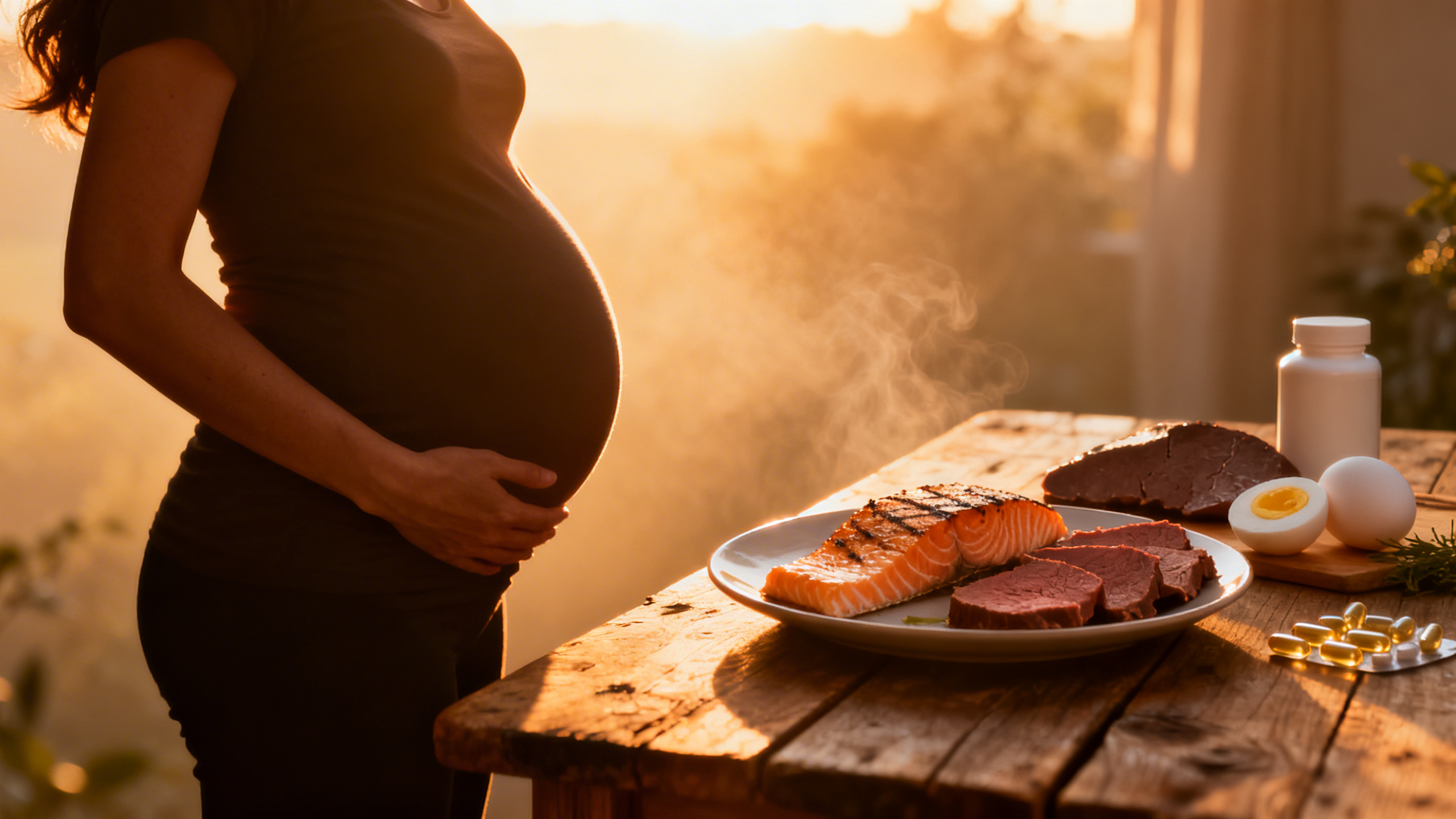
Many women who’ve maintained carnivore through pregnancy have made modifications: adding grass-fed liver 2-3 times weekly for folate, including fatty fish regularly for DHA, emphasizing eggs daily for choline, and taking targeted supplementation under healthcare provider guidance.
Breastfeeding on Carnivore
Breastfeeding on carnivore is more straightforward than pregnancy. It demands calories and protein, both of which carnivore abundantly provides. Many women report that continuing carnivore while breastfeeding helps with energy levels, mood stability, and recovery from birth.
Postpartum Recovery
Carnivore can be excellent for postpartum recovery. The protein supports tissue repair and wound healing. The nutrient density helps replenish iron, B vitamins, and other nutrients depleted during pregnancy. This is not the time to restrict calories—eat generously.
Working with Your Healthcare Provider
Pregnancy is not the time for diet experimentation without professional guidance. Transparency and partnership with your healthcare team is essential. Blood work should be monitored, nutrients tracked, and supplementation strategic. If you do move forward with carnivore during pregnancy, do so with a healthcare provider who supports and monitors your journey.